A practical guide to teaching with the BBC micro:bit in 2026
Start the year with confidence and make the most of your BBC micro:bit with practical, classroom-ready support.
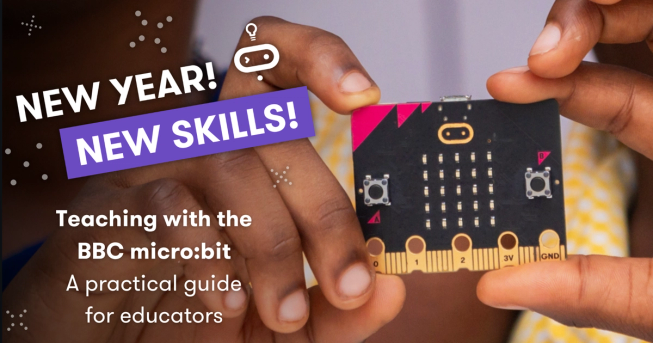
Whether you’re getting started with the micro:bit or building digital literacy skills through computing, this guide brings together free professional development, ready-made lesson resources and inclusive classroom tools to support confident teaching. You’ll find flexible, easy-to-use support designed to fit real classroom practice - all available for free on our website.

1. Build your skills with short professional development courses
Our free professional development courses help educators strengthen their approach to teaching computing with the micro:bit. Short, video-based and self-paced, they fit easily around busy schedules and focus on ideas you can use straight away in the classroom.
Popular courses include:
- Computing fundamentals – build a strong foundation in teaching core computing concepts with the micro:bit
- Design thinking – support learners to design creative solutions to real-world problems
- Controlling physical systems – explore how code interacts with the physical world
Each course includes practical classroom examples and activities that can be used directly with learners.

2. Explore practical webinars and events
Our webinars share practical insights into teaching with the micro:bit, with clear demonstrations and real classroom examples. Led by experienced educators, sessions explore approaches to developing digital literacy across a range of subjects.
You’ll find webinars covering:
- getting started with the micro:bit and practical classroom activities
- inclusive classroom practice
- topics such as AI, data, and physical computing
Whether you join live or catch up later, webinars offer an easy way to discover new ideas and approaches.
3. Save time with ready-made units of work and lesson plans
Our website includes a collection of ready-made units of work and lesson plans to support teaching with the micro:bit across computing and other subjects. Each unit is carefully structured and includes lesson plans, teacher notes, slides and student handouts — helping reduce planning time while supporting confident delivery.
If you’re looking for a simple place to start, explore:
- First lessons with the micro:bit – structured units designed to introduce devices and core computing concepts
- CreateAI taster lessons – short lesson sequences that introduce AI concepts in an accessible way
All units are classroom-tested, flexible and easy to adapt to your learners and context.

4. Use flexible, classroom-ready resources
Alongside full units of work and lesson plans, you’ll find a wide range of flexible classroom resources to support teaching with the micro:bit. These resources are quick to adapt and suitable for a variety of learning environments — including offline or low-tech settings.
These include:
- printable posters and visual prompts
- worksheets and activity packs
- unplugged and offline activities to support learning away from screens
They’re ideal for reinforcing key concepts, supporting discussion, or extending learning beyond a single lesson.
5. Support accessible and inclusive teaching
Our accessibility resources help educators make teaching with the micro:bit more accessible and inclusive across a range of classroom contexts.
You’ll find:
- Teacher guides with practical tips for supporting learners with different access needs, including ideas for hardware adaptations and accessible coding
- Product-specific accessibility information for tools such as Microsoft MakeCode, the Python Editor, and micro:bit CreateAI
These resources can be used alongside lessons and units of work to help remove barriers and support participation.
Try one or more of these ideas to support confident, creative teaching with the micro:bit. Whether you’re developing digital literacy skills, saving time with ready-made resources, or exploring more inclusive approaches, there’s plenty here to support you and your learners.
For more ideas and classroom inspiration, follow us on social media. Our channels showcase how educators around the world are using the micro:bit across subjects and age groups. You’ll find practical examples, new resources and teaching ideas — and if you’re happy to share, tag us and use #microbit so others can learn from your work too.
You can find us on LinkedIn, Instagram, Facebook and also X.